> For the complete documentation index, see [llms.txt](https://docs.rapidbott.com/help-center/llms.txt). Markdown versions of documentation pages are available by appending `.md` to page URLs; this page is available as [Markdown](https://docs.rapidbott.com/help-center/mini-apps/mini-app-2.0/settings.md).
# Settings
The settings section is where you provide basic information about your app, including app name, description, logo, cover image, video link and API scope.
Users can view your app information in the app store before they download your app.
### Edit Settings
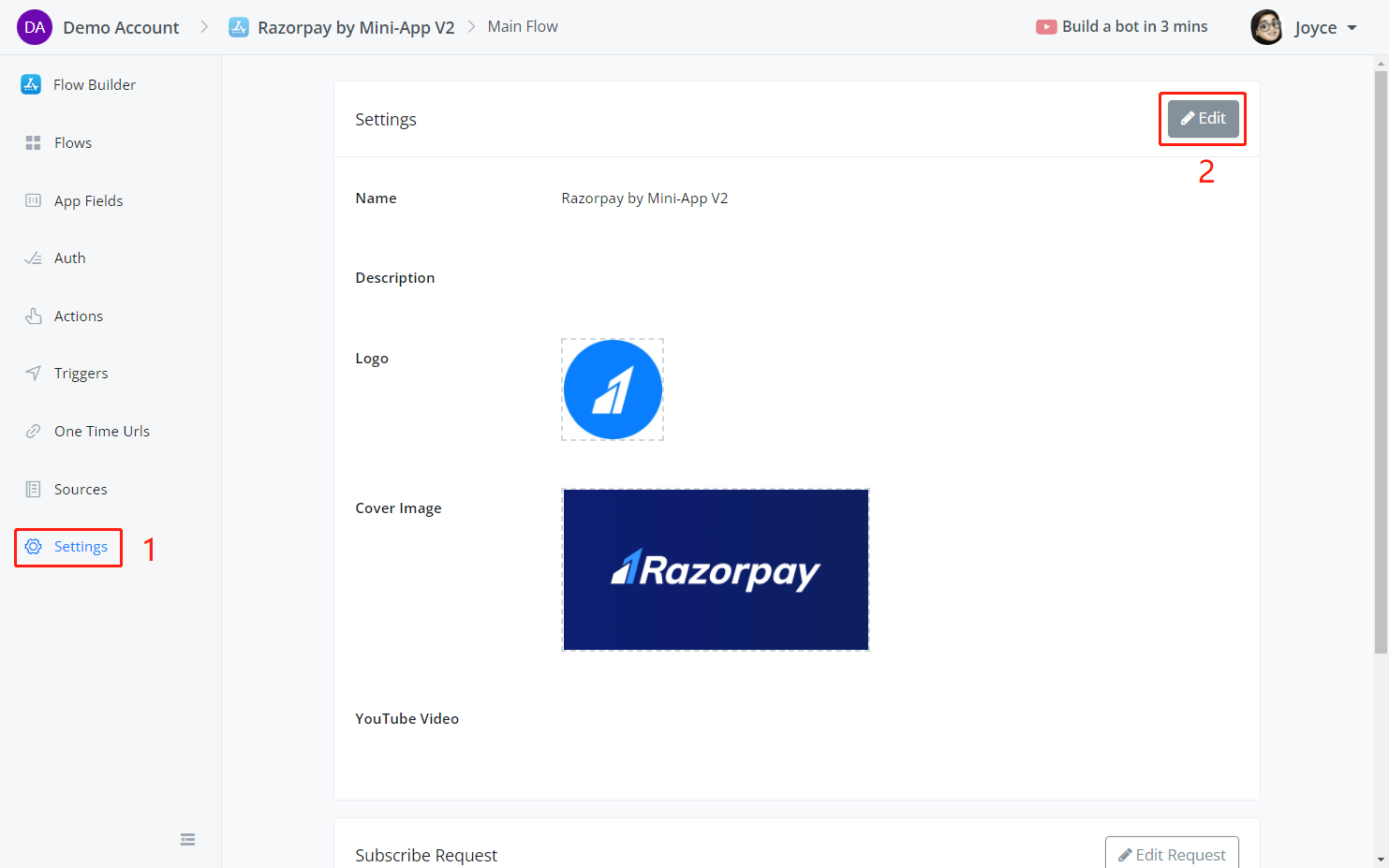
In the settings section, click on **Edit**:
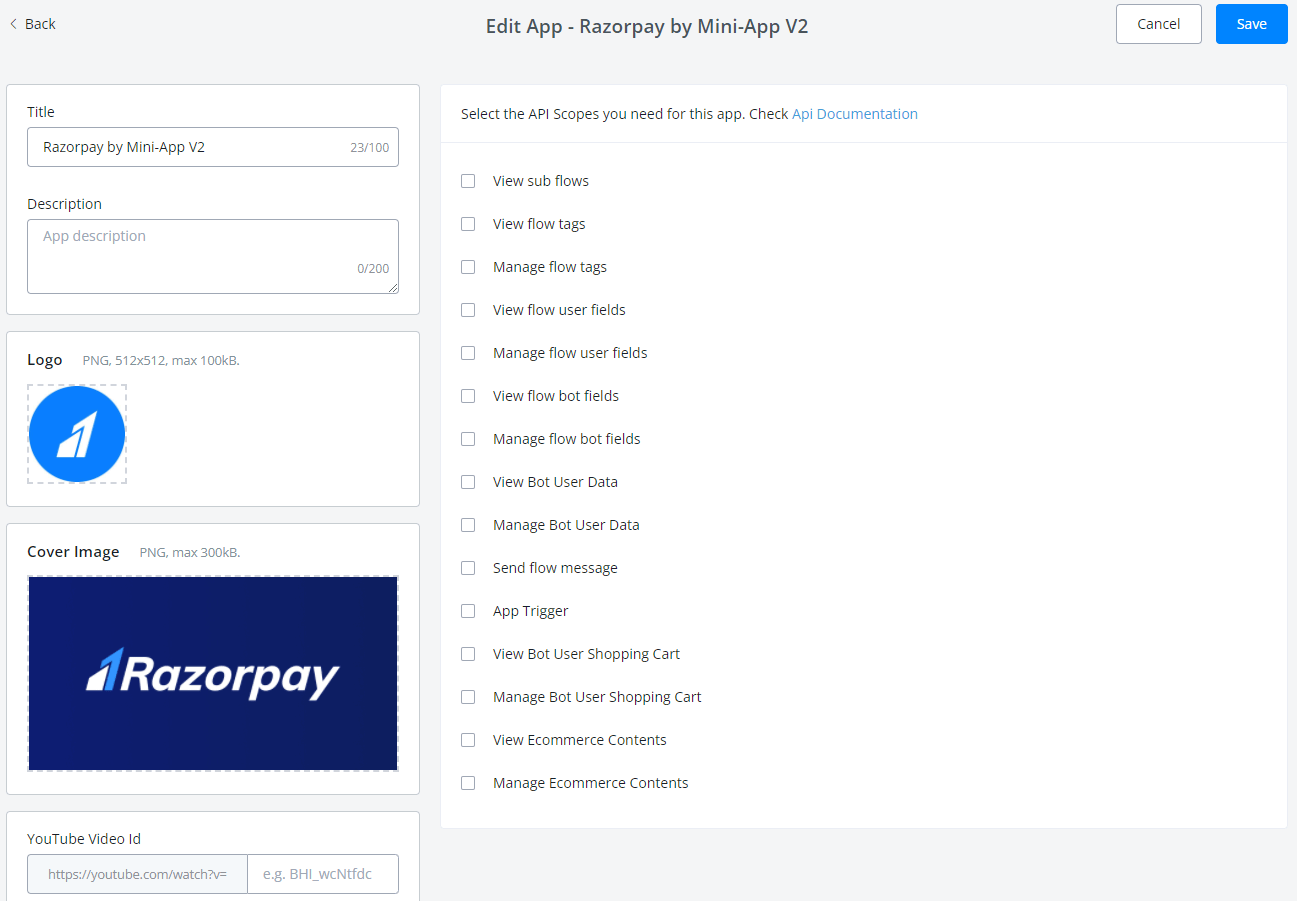
In the API scope, check which scope the app needs to access in users' chatbots. For example, if your app needs to read tags in the user's chatbot, check "View flow tags" here:
{% hint style="info" %}
IMPORTANT
If your app needs to access user data via API call, e.g. read bot user data, send subflow in the chatbot, etc, when users download your app, the system will generate an API key with the scope required automatically. And send the key to you via a **Subscribe Request**. Check "Subscribe & Unsubscribe Request" below.
{% endhint %}
### Subscribe & Unsubscribe Request
Whenever users install your app, the system performs the subscribe request to send necessary data to your server.
Also, whenever users uninstall your app, the system performs an unsubscribe request to send necessary data to your server.
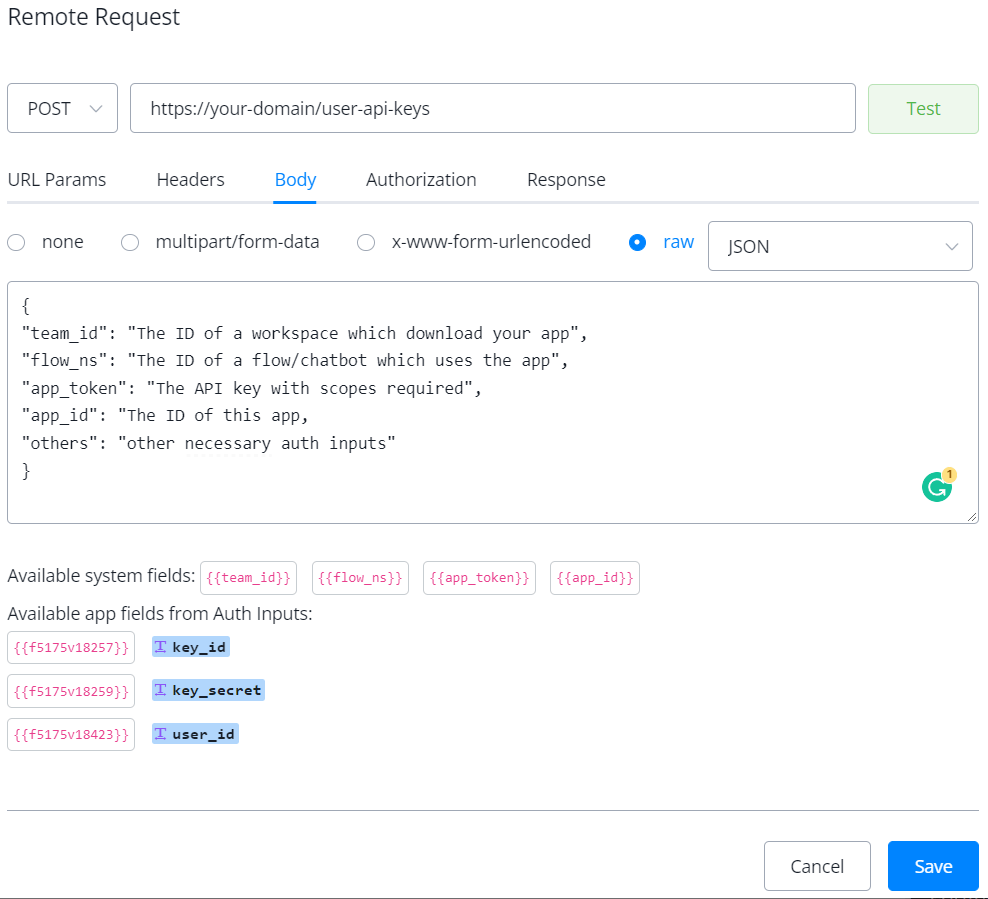
By setting up the above [external request](/help-center/flow-builder/advanced-actions/external-request.md), the system will send you the information after users install the app and provide the auth inputs
You have 4 available system fields and any other values you set up in auth inputs. See the **Auth** section for how to set up auth inputs.
